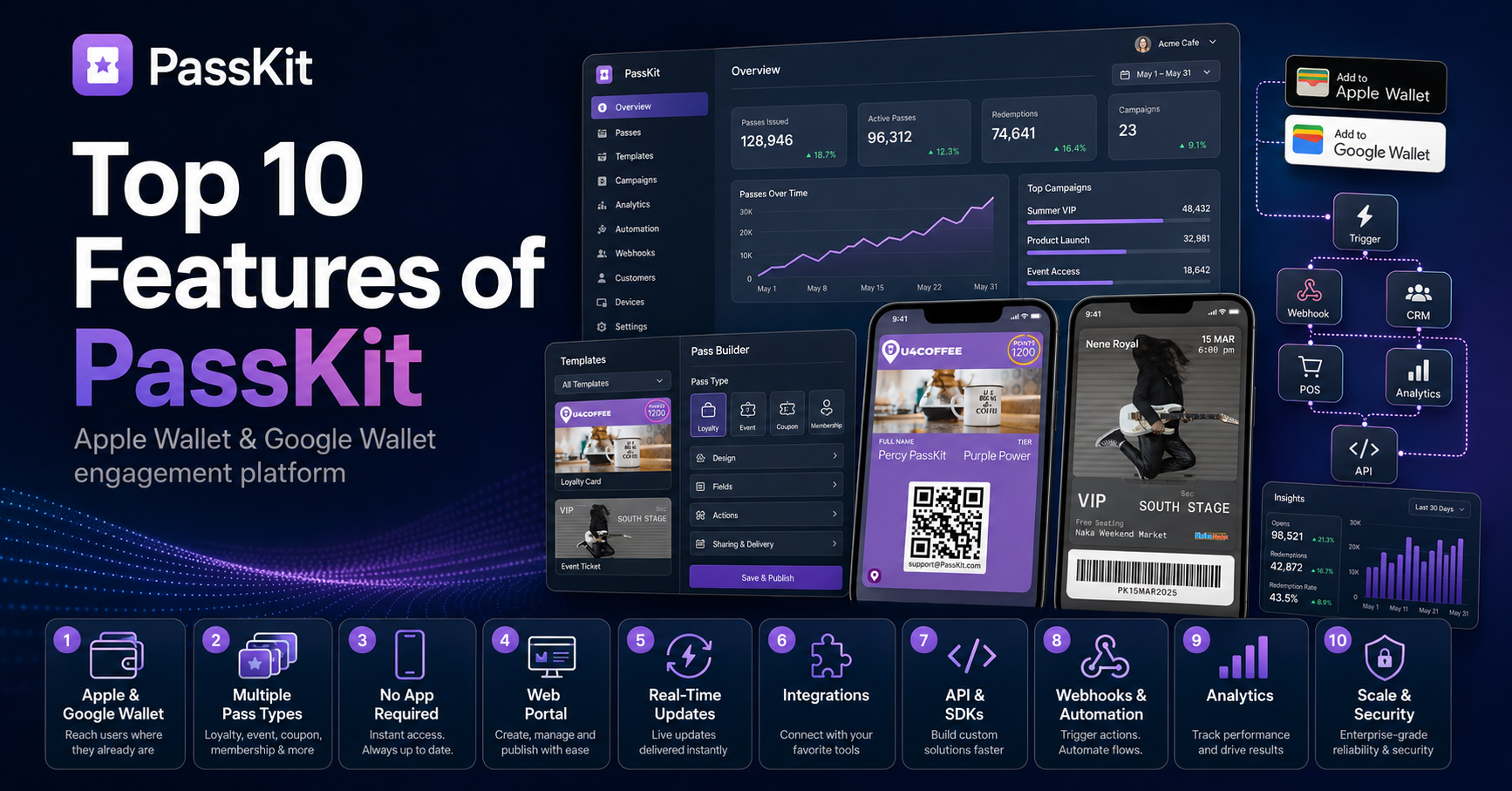
I spend a lot of time thinking about digital wallets, where every coffee shop, venue, loyalty program, transit app, and fintech demo seems to have a different idea of what “wallet-ready” should mean. The part people usually see is the pass: the Apple Wallet card, the Google Wallet object, the QR code, the tap, the scan, the redemption.
But the part that decides whether wallet infrastructure actually gets adopted is usually much less glamorous: the API documentation.
Addtowallet has been pushing its API docs into first-class territory, and the recent work shows a pretty clear philosophy. Documentation should not just describe the platform. It should help developers ship against it.

The new docs are built around a full API reference generated from public route annotations, which means the source of truth stays close to the backend and the docs are less likely to drift. That alone matters in a wallet ecosystem where teams are stitching together campaigns, passes, scanners, templates, exports, webhooks, API keys, and enrollment flows. If the docs are stale, the integration slows down. If the docs are alive, the API feels a lot smaller than it actually is.
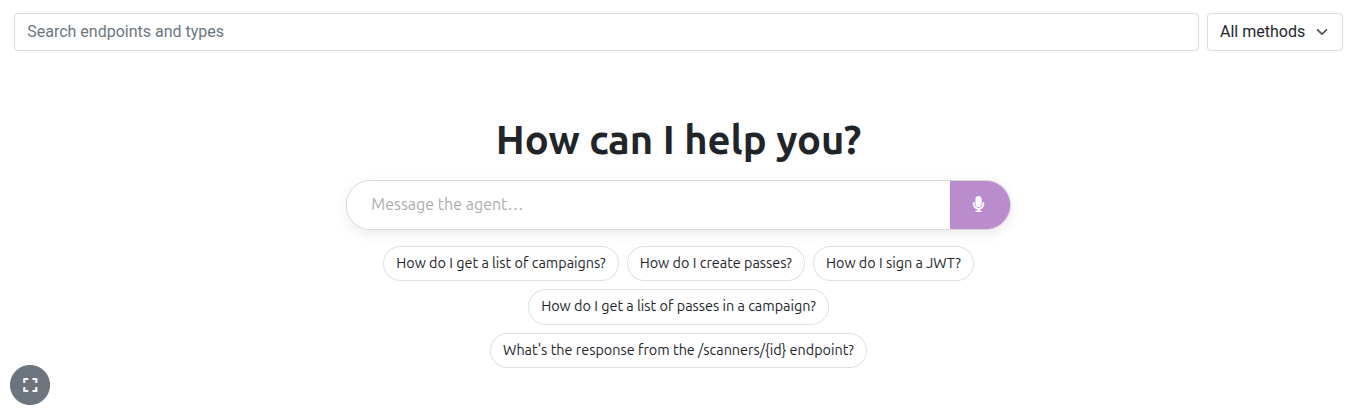
The experience now feels much more like a developer workbench. You get searchable endpoints, method filters, collapsible sections, favorites, dark mode, and a responsive layout that does not punish you for reading docs on a laptop screen during a build session. Response types are pulled into a dedicated Types section, so you can jump from an endpoint response to the TypeScript shape behind it instead of guessing from prose.

The code samples are also more serious now. The docs include cURL, JavaScript, Python, PHP, and SDK examples, with SDK versioning called out directly in the interface. That is the right move for a wallet platform because integrations rarely happen in one language. The marketing team might care about campaign results, but the implementation is probably split across a backend service, a webhook receiver, a data pipeline, and a dashboard. Good docs meet those teams where they are.

The biggest upgrade is the interactive layer. The “Try Me” flow lets developers authenticate with an API key and secret, populate examples with a live bearer token, fill path and query parameters, preview the resolved URL, send the request, and inspect response body, headers, status, and timing. It even lets you export a single-request Postman collection from the current modal state. That is exactly the kind of detail that removes friction from API adoption.
Webhooks got similar treatment. Addtowallet now has a webhook tester that sends realistic dummy events to a URL you provide, then shows the receiver response. For wallet systems, that is a big deal. Webhooks are where the real business workflow begins: claimed passes, scans, redemptions, enrollment errors, campaign failures, export completion, Apple Wallet actions. A webhook tester turns that from “read the docs and hope” into “send a payload and see what your system does.”
There is also a more future-facing piece: MCP documentation and LanceDB-backed help search. Addtowallet is making the docs searchable by AI assistants through a search_help tool, with the API docs published into the help index. That fits where developer experience is going. People are no longer only browsing docs manually; they are asking their editor, agent, or internal tool, “How do I create passes?” or “What does this scanner endpoint return?” First-class docs now need to be both human-readable and agent-readable.
That is the real story here. Addtowallet is not just making prettier API docs. It is treating documentation as part of the integration surface.
In the digital wallet ecosystem, the best platforms are the ones that make complicated infrastructure feel direct. Pass creation, wallet installation, scans, redemptions, campaign analytics, and webhook automation are all inherently cross-system problems. The docs are where those systems first meet.
Addtowallet’s recent API documentation work feels like a bet that developers should be able to understand, test, search, authenticate, simulate, export, and automate from the same place.
That is what first-class API documentation looks like now.