I spend more time than I’d like admitting comparing “wallet pass” vendors instead of going outside. When I dug through Addtowallet, what stood out wasn’t a single flashy UI trick, it was how deliberately the product is built around real operations: design passes, ship them at scale, redeem them in the physical world, and hook everything into your stack.
Below are the ten capabilities that, taken together, explain why teams bother with a dedicated wallet platform instead of duct-taping PDFs to email.
1. Apple Wallet and Google Wallet in one place
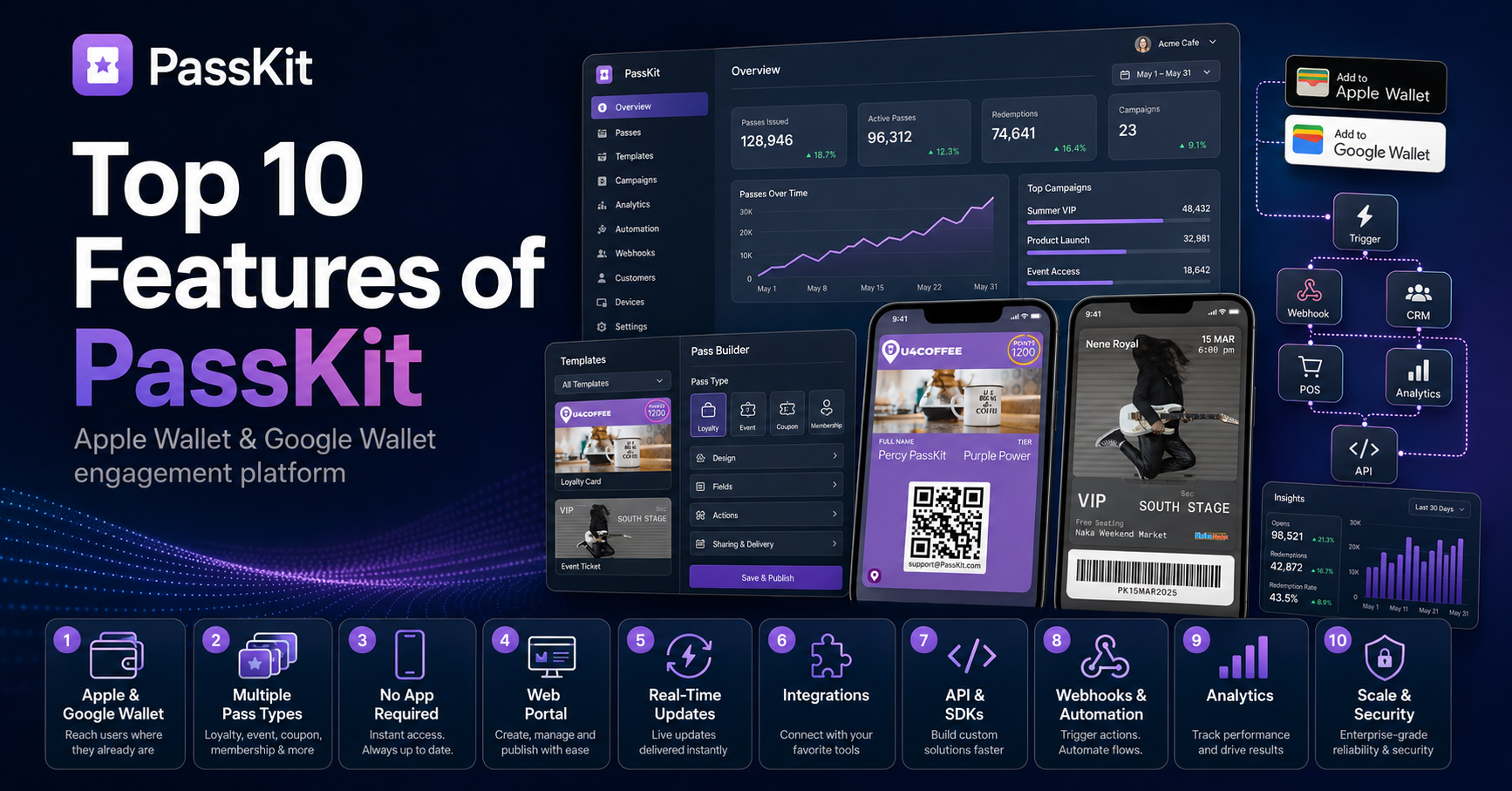
Addtowallet is positioned squarely as a SaaS for creating and distributing passes for both Apple Wallet and Google Wallet. Coupons, tickets, store cards, boarding-style passes, and generic passes so you’re not maintaining two parallel hacks.
2. A real campaign model
The product centers on campaigns: group passes under a campaign, track metrics like claimed and enrolled users, and run the kind of bulk work that needs cloud functions. That’s the difference between “we sent a link” and “we’re running a program.”
3. Visual design
There’s a dedicated builder and templates area in the app (with versioning pages), which maps to how teams iterate on layout and fields before anything hits a phone. Design isn’t an afterthought bolted onto an API. It’s a first-class surface.
4. Claim experiences that meet users where they are
Installed passes can be tracked and updated. Every completion is an event the rest of the system can react to: pass claimed hooks fire when request logs update, webhooks and integrations can fan those signals into your CRM, attribution tools, or warehouse, and campaigns expose progress metrics (claimed vs. issued, enrollment, and related counts) so marketing isn’t guessing whether a promo actually moved wallets.
5. Scanner apps
This one sold me. The Addtowallet scanner app runs on Android and iPhone devices. Each scan writes a scanner log, updates pass/device state, can fire webhooks, and can enqueue on-scan workflows. That’s venue gates, retail counters, and kiosks, not a glorified QR reader.
6. Custom workflows when “no-code” isn’t enough
A separate workflows service runs organization supplied code in a controlled pipeline: lint, bundle, pull snippets and npm dependencies, then execute via an isolated SDK against the API. For teams that need conditional logic, integrations, or transformations, this is the escape hatch without giving untrusted code free rein on the core API server.
7. Webhooks and API keys as first-class citizens
Addtowallet includes first-class support for connecting your own systems. Organizations can manage API keys and webhooks from the product, alongside campaigns and passes.
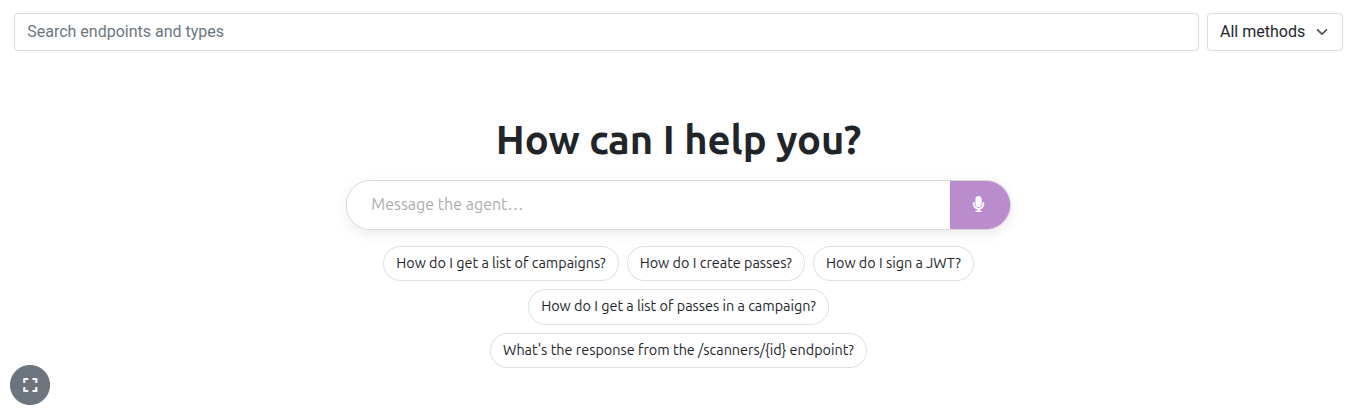
The public API is documented from the backend so customer-facing endpoints stay accurate and consistent.The documentation supports hands-on use through Try Me flows, and there are dedicated pages for API keys and webhooks, including tooling to test webhooks before you rely on them in production. Together, that makes it practical to automate pass lifecycle work, sync data with internal services, and subscribe to events without treating the API as an afterthought.
8. Powerful integrations
Integrations are optional modules your organization installs from the integrations catalog, which capabilities it supports things like importing campaign data, exporting links or records, or scheduled runs, and hooks that fire when relevant events happen (pass claimed, scanner log written, job finished, and so on).
Populate integrations include FTP/sFTP, GCP, Firstore, MySQL, and BigQuery.
9. Operational tooling beyond “create pass, hope for the best”
Addtowallet’s UI is built for people who have to debug and ship, not just demo: pushes, enrollment, jobs, errors, Apple-specific logs, campaign download/embed, locations and iBeacons, exporters, data stores, certificates, and more exposed through an easy to use dashboard.
10. Multi-user organizations and developer ergonomics
Team pages, organization level scanners and integrations, custom domain settings, plus generated public API documentation with extras like theme toggle, favorites, and multi-language code examples the whole thing screams B2B SaaS with developers in the room. You’re not picking between “marketing-friendly” and “API-first”; the codebase assumes both.
Closing thought
If you’re evaluating wallet platforms, ask vendors the boring questions Addtowallet’s architecture already answers: How do bulk imports run? What happens on scan in the field? Can I embed claiming? Can I automate beyond static templates? From what’s in the repo, Addtowallet isn’t trying to be a novelty, it’s trying to be infrastructure for passes that move through design → distribution → redemption → automation, which is exactly where most “simple” tools fall apart.